


By injecting a customized “genetic patch” into early stage fish embryos, researchers at Washington University School of Medicine in St. Louis were able to correct a genetic mutation so the embryos developed normally.
The research could lead to the prevention of up to one-fifth of birth defects in humans caused by genetic mutations, according to the authors.
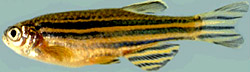
Erik C. Madsen, first author and an M.D./Ph.D. student in the Medical Scientist Training Program at Washington University School of Medicine, made the groundbreaking discovery using a zebrafish model of Menkes disease, a rare, inherited disorder of copper metabolism caused by a mutation in the human version of the ATP7A gene. Zebrafish are vertebrates that develop similarly to humans, and their transparency allows researchers to observe embryonic development.
Children who have Menkes disease have seizures, extensive neurodegeneration in the gray matter of the brain, abnormal bone development and kinky, colorless hair. Most children with Menkes die before age 10, and treatment with copper is largely ineffective.
The research is published this month in the Proceedings of the National Academy of Sciences’ advance online edition.
The development of organs in the fetus is nearly complete at a very early stage. By that time, the mutation causing Menkes disease has already affected brain and nerve development.
Madsen and Bryce Mendelsohn, also an M.D./Ph.D. student at the School of Medicine, wondered if they could prevent the Menkes-like disease in zebrafish by correcting genetic mutations that impair copper metabolism during the brief period in which organs develop. Both students work in the lab of Jonathan D. Gitlin, M.D., the Helene B. Roberson Professor of Pediatrics at the School of Medicine and director of Genetics and Genomic Medicine at St. Louis Children’s Hospital.
The researchers used zebrafish with two different mutations in the ATP7A gene, resulting in a disease in the fish that has many of the same characteristics of the human Menkes disease. Madsen designed a specific therapy to correct each mutation with morpholinos, synthetic molecules that modify gene expression. The zebrafish embryos were injected with the customized therapy during the critical window of development, and the researchers found that the zebrafish hatched and grew without any discernable defects.
“This method of copper delivery suggests that the prevention of the neurodegenerative features in Menkes disease in children may be possible with therapeutic interventions that correct the genetic defect within a specific developmental window,” Madsen said.
The genetic mutations Madsen and the researchers worked with are caused by splicing defects, or an interruption in genetic code. The morpholinos prevent that interruption by patching over the defect so the gene can generate its normal product.
“Consider the genetic code as a book, and someone has put in random letters or gibberish in the middle of the book,” Madsen said. “To be able to read the book, you have to ignore the gibberish. If we can make cells ignore the gibberish, or the splicing defect, the fetus can develop normally.”
Up to 20 percent of genetic diseases are caused by splicing defects, Madsen said, so this treatment method could potentially be used for many other genetic diseases.
“The idea is that we can modify the treatment to target a specific mutation and design molecules to alter gene function in the same way the morpholino oligonucleotides can,” Gitlin said.
The work is an important step toward personalized medicine, which can tailor treatment to an individual’s genetic makeup.
“Eventually we would like to know each person’s genome sequence so we know what mutations each person has that may lead to disease,” Gitlin said. “That way, you don’t get a drug for cancer that works against any kind of cancer, you get a drug for the specific mutation that causes your cancer. That’s what personalized medicine is all about.”
Madsen EC, Morcos PA, Mendelsohn BA, Gitlin, JD. In vivo correction of a Menkes disease model using antisense oligonucleotides. Proceedings of the National Academy of Sciences, early edition, March 3, 2008.
Washington University School of Medicine’s 2,100 employed and volunteer faculty physicians also are the medical staff of Barnes-Jewish and St. Louis Children’s hospitals. The School of Medicine is one of the leading medical research, teaching and patient care institutions in the nation, currently ranked fourth in the nation by U.S. News & World Report. Through its affiliations with Barnes-Jewish and St. Louis Children’s hospitals, the School of Medicine is linked to BJC HealthCare.